Demo image Demo image Demo image Demo image Demo image Demo image Demo image Demo image Demo image Demo image Demo image
Showing posts with label Reptilia. Show all posts

The leopard gecko (Eublepharis macularius) is a Crepuscular Ground-dwelling Lizard Naturally found in the Deserts of Asia and throughout Pakistan. (19 Pics)

  • Friday, March 7, 2014
  • Unknown
  • Labels:
  • Amazing Pictures of Animals, Photo, Nature, Incredibel, Funny, Zoo, Eublepharis macularius, Leopard gecko, Alex (1)

    The leopard gecko (Eublepharis macularius) is a crepuscular ground-dwelling lizard naturally found in the deserts of Asia and throughout Pakistan, to the northwestern parts of India. Unlike most geckos, leopard geckos possess movable eyelids. It has become a well-established and popular pet in captivity.The native habitat of the leopard gecko is the rocky, dry grassland and desert regions of south-Asian Afghanistan, Pakistan, north-west India, and some parts of Iran. Winter temperatures in these areas can be quite low, below 10 °C (50 °F), forcing the animals underground into semi-hibernation, called brumation, living on fat reserves. Leopard geckos are crepuscular reptiles; they are limited to the burrows during the day but become active at dawn and dusk when the temperature is favorable.[6] These geckos are solitary, and do not usually live with other animals. Leopard geckos are polyphyodonts and able to replace each of their 100 teeth every 3 to 4 months.[11] Next to the full grown tooth there is a small replacement tooth developing from the odontogenic stem cell in the dental lamina.


    Amazing Pictures of Animals, Photo, Nature, Incredibel, Funny, Zoo, Eublepharis macularius, Leopard gecko, Alex (1)


    Amazing Pictures of Animals, Photo, Nature, Incredibel, Funny, Zoo, Eublepharis macularius, Leopard gecko, Alex (2)


    Amazing Pictures of Animals, Photo, Nature, Incredibel, Funny, Zoo, Eublepharis macularius, Leopard gecko, Alex (3)


    Amazing Pictures of Animals, Photo, Nature, Incredibel, Funny, Zoo, Eublepharis macularius, Leopard gecko, Alex (4)


    Amazing Pictures of Animals, Photo, Nature, Incredibel, Funny, Zoo, Eublepharis macularius, Leopard gecko, Alex (5)


    Amazing Pictures of Animals, Photo, Nature, Incredibel, Funny, Zoo, Eublepharis macularius, Leopard gecko, Alex (6)


    Amazing Pictures of Animals, Photo, Nature, Incredibel, Funny, Zoo, Eublepharis macularius, Leopard gecko, Alex (7)


    Amazing Pictures of Animals, Photo, Nature, Incredibel, Funny, Zoo, Eublepharis macularius, Leopard gecko, Alex (8)


    Amazing Pictures of Animals, Photo, Nature, Incredibel, Funny, Zoo, Eublepharis macularius, Leopard gecko, Alex (9)


    Amazing Pictures of Animals, Photo, Nature, Incredibel, Funny, Zoo, Eublepharis macularius, Leopard gecko, Alex (10)


    Amazing Pictures of Animals, Photo, Nature, Incredibel, Funny, Zoo, Eublepharis macularius, Leopard gecko, Alex (11)


    Amazing Pictures of Animals, Photo, Nature, Incredibel, Funny, Zoo, Eublepharis macularius, Leopard gecko, Alex (12)


    Amazing Pictures of Animals, Photo, Nature, Incredibel, Funny, Zoo, Eublepharis macularius, Leopard gecko, Alex (13)


    Amazing Pictures of Animals, Photo, Nature, Incredibel, Funny, Zoo, Eublepharis macularius, Leopard gecko, Alex (14)


    Amazing Pictures of Animals, Photo, Nature, Incredibel, Funny, Zoo, Eublepharis macularius, Leopard gecko, Alex (15)


    Amazing Pictures of Animals, Photo, Nature, Incredibel, Funny, Zoo, Eublepharis macularius, Leopard gecko, Alex (16)

    Eunectes murinus, Commonly Known as the Green Anaconda, is a non-venomous Boa Species Found in South America. (20 Pics)

  • Friday, December 6, 2013
  • Unknown
  • Labels: ,
  • Amazing Pictures of Animals, Photo, Nature, Incredibel, Funny, Zoo, Eunectes murinus,Green Anaconda, Water Boa, Alex (1)

    Eunectes murinus (derived from the Greek ευνήκτης meaning "good swimmer" and the Latin murinus meaning "of mice" for being thought to prey on mice), commonly known as the green anaconda, is a non-venomous boa species found in South America. It is the largest, heaviest, and second longest (behind the reticulated python) known extant snake species. The term anaconda (without further qualification) often refers to this species, though the term could also apply to other members of the genus Eunectes. Other common names include common anaconda and water boa.The green anaconda is the world's heaviest and one of the world's longest snakes, reaching more than 6.6 m (22 ft) long.[2] More typical mature specimens reportedly can range up 5 m (16 ft), with the females, at around a mean length of 4.6 m (15 ft), being generally much larger in adulthood than the male, which averages around 3 m (9.8 ft).[3][4][5] Weights are less well studied, though will reportedly range from 30 to 70 kg (66 to 150 lb) in an average-range adult.[6][7] It is the largest snake native to the Americas. The remote location of the snake's habitat has historically made locating, capturing, and returning specimens difficult. Transporting very large specimens to museums, especially before substantial decay, is difficult (though this has not prevented the return of much larger and more cumbersome crocodilian specimens).[9] Skins can stretch substantially, increasing the snake's size by more than 50% if stretched during the tanning process. Reports without physical proof are considered dubious if from nonscientists, as such individuals may at worst be more interested in promoting themselves or telling a good tale, or at the least may not be sufficiently trained in proper measurement methods. Observational reports of animals which were not captured are even more dubious, as even trained scientists often substantially overestimate the size of anacondas prior to capture.[9] According to the Guinness Book of World Records, this species has been perhaps subject to the most extreme size exaggerations of any living animal.[8] At the same time, it is difficult to argue a maximum possible or plausible size, because anacondas are known to continue to grow throughout their lives. Older reports in particular could include individuals which, in times of less pressure from humans, lived longer lives and thus reached greater sizes.

    from:http://en.wikipedia.org/wiki/Eunectes_murinus


    Amazing Pictures of Animals, Photo, Nature, Incredibel, Funny, Zoo, Eunectes murinus,Green Anaconda, Water Boa, Alex (2)


    Amazing Pictures of Animals, Photo, Nature, Incredibel, Funny, Zoo, Eunectes murinus,Green Anaconda, Water Boa, Alex (3)


    Amazing Pictures of Animals, Photo, Nature, Incredibel, Funny, Zoo, Eunectes murinus,Green Anaconda, Water Boa, Alex (14)


    Amazing Pictures of Animals, Photo, Nature, Incredibel, Funny, Zoo, Eunectes murinus,Green Anaconda, Water Boa, Alex (13)


    Amazing Pictures of Animals, Photo, Nature, Incredibel, Funny, Zoo, Eunectes murinus,Green Anaconda, Water Boa, Alex (4)


    Amazing Pictures of Animals, Photo, Nature, Incredibel, Funny, Zoo, Eunectes murinus,Green Anaconda, Water Boa, Alex (5)


    Amazing Pictures of Animals, Photo, Nature, Incredibel, Funny, Zoo, Eunectes murinus,Green Anaconda, Water Boa, Alex (6)


    Amazing Pictures of Animals, Photo, Nature, Incredibel, Funny, Zoo, Eunectes murinus,Green Anaconda, Water Boa, Alex (7)


    Amazing Pictures of Animals, Photo, Nature, Incredibel, Funny, Zoo, Eunectes murinus,Green Anaconda, Water Boa, Alex (8)


    Amazing Pictures of Animals, Photo, Nature, Incredibel, Funny, Zoo, Eunectes murinus,Green Anaconda, Water Boa, Alex (9)


    Amazing Pictures of Animals, Photo, Nature, Incredibel, Funny, Zoo, Eunectes murinus,Green Anaconda, Water Boa, Alex (10)


    Amazing Pictures of Animals, Photo, Nature, Incredibel, Funny, Zoo, Eunectes murinus,Green Anaconda, Water Boa, Alex (11)


    Amazing Pictures of Animals, Photo, Nature, Incredibel, Funny, Zoo, Eunectes murinus,Green Anaconda, Water Boa, Alex (12)


    Amazing Pictures of Animals, Photo, Nature, Incredibel, Funny, Zoo, Eunectes murinus,Green Anaconda, Water Boa, Alex (15)


    Amazing Pictures of Animals, Photo, Nature, Incredibel, Funny, Zoo, Eunectes murinus,Green Anaconda, Water Boa, Alex (16)


    Amazing Pictures of Animals, Photo, Nature, Incredibel, Funny, Zoo, Eunectes murinus,Green Anaconda, Water Boa, Alex (17)


    Amazing Pictures of Animals, Photo, Nature, Incredibel, Funny, Zoo, Eunectes murinus,Green Anaconda, Water Boa, Alex (18)


    Amazing Pictures of Animals, Photo, Nature, Incredibel, Funny, Zoo, Eunectes murinus,Green Anaconda, Water Boa, Alex (19)


    Amazing Pictures of Animals, Photo, Nature, Incredibel, Funny, Zoo, Eunectes murinus,Green Anaconda, Water Boa, Alex (20)

    Crested Gecko,One of the most beautiful reptiles in the World (15 Pics)

  • Saturday, November 16, 2013
  • Teo
  • Labels: ,
  • Amazing Animal Pictures crested geckos (1)

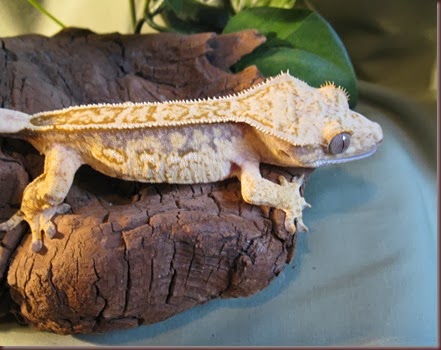
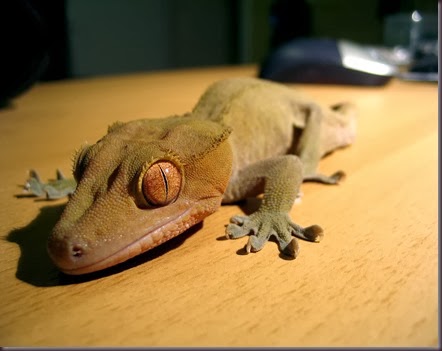
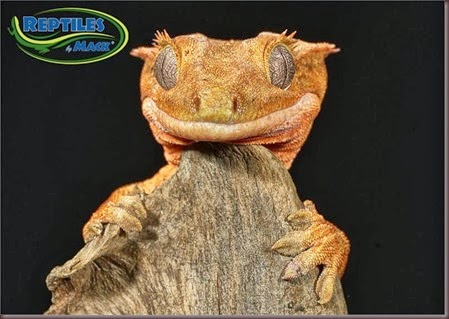
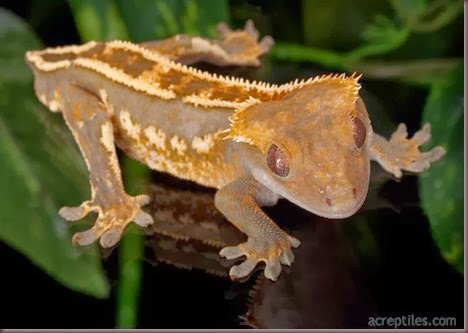
    The crested gecko, New Caledonian crested gecko, Guichenot's giant gecko or eyelash gecko, Correlophus ciliatus, is a species of gecko native to southern New Caledonia. This species was thought extinct until it was rediscovered in 1994. Along with several Rhacodactylus species, it is being considered for protected status by the Convention on the International Trade in Endangered Species of Wild Flora and Fauna. It is popular in the pet trade.

    e crested gecko has hair-like projections found above the eyes, resembling eyelashes. It has a wedge shaped head and a crest that runs from each eye to the tail. Crested geckos do not have eyelids and so they use their long tongues to moisten their eyes and remove debris. The toes and the tip of the semi-prehensile tail are covered in small hairs called setae. Each seta is divided into hundreds of smaller (approximately 200 nanometres in diameter) hairs called spatulae. It is believed these structures exploit the weak van der Waals force to help the gecko climb on most solid surfaces. The toes have small claws which aid in climbing surfaces to which their toes cannot cling. They possess a prehensile tail which they use to assist in climbing. The tail can be shed as a deterent to predators. Unlike some other geckos once they lose their tail it will not grow back, however this is not as harmful to the gecko as it is to others, such as the Leopard gecko.

    The crested gecko is endemic to South Province, New Caledonia. There are three disjunct populations, one found on the Isle of Pines and surrounding islets, and there are two populations found on the main island of Grande Terre. One population is around the Blue River, which is a protected provincial park, and the other is further north, just south of Mount Dzumac.


    From : http://en.wikipedia.org/wiki/Crested_gecko


    Amazing Animal Pictures crested geckos (2)


    Amazing Animal Pictures crested geckos (3)


    Amazing Animal Pictures crested geckos (4)


    Amazing Animal Pictures crested geckos (5)


    Amazing Animal Pictures crested geckos (6)


    Amazing Animal Pictures crested geckos (7)


    Amazing Animal Pictures crested geckos (8)


    Amazing Animal Pictures crested geckos (9)


    Amazing Animal Pictures crested geckos (10)


    Amazing Animal Pictures crested geckos (11)


    Amazing Animal Pictures crested geckos (12)


    Amazing Animal Pictures crested geckos (13)


    Amazing Animal Pictures crested geckos (14)


    Amazing Animal Pictures crested geckos (15)